
Teach your students to think in arguments
Your students build Toulmin diagrams, work through arguments with an AI coach, and analyze real texts. They do the reasoning. The AI asks questions.
Three ways to master argumentation
Build from scratch, learn with AI guidance, or analyze real texts. Pick the mode that fits your lesson.
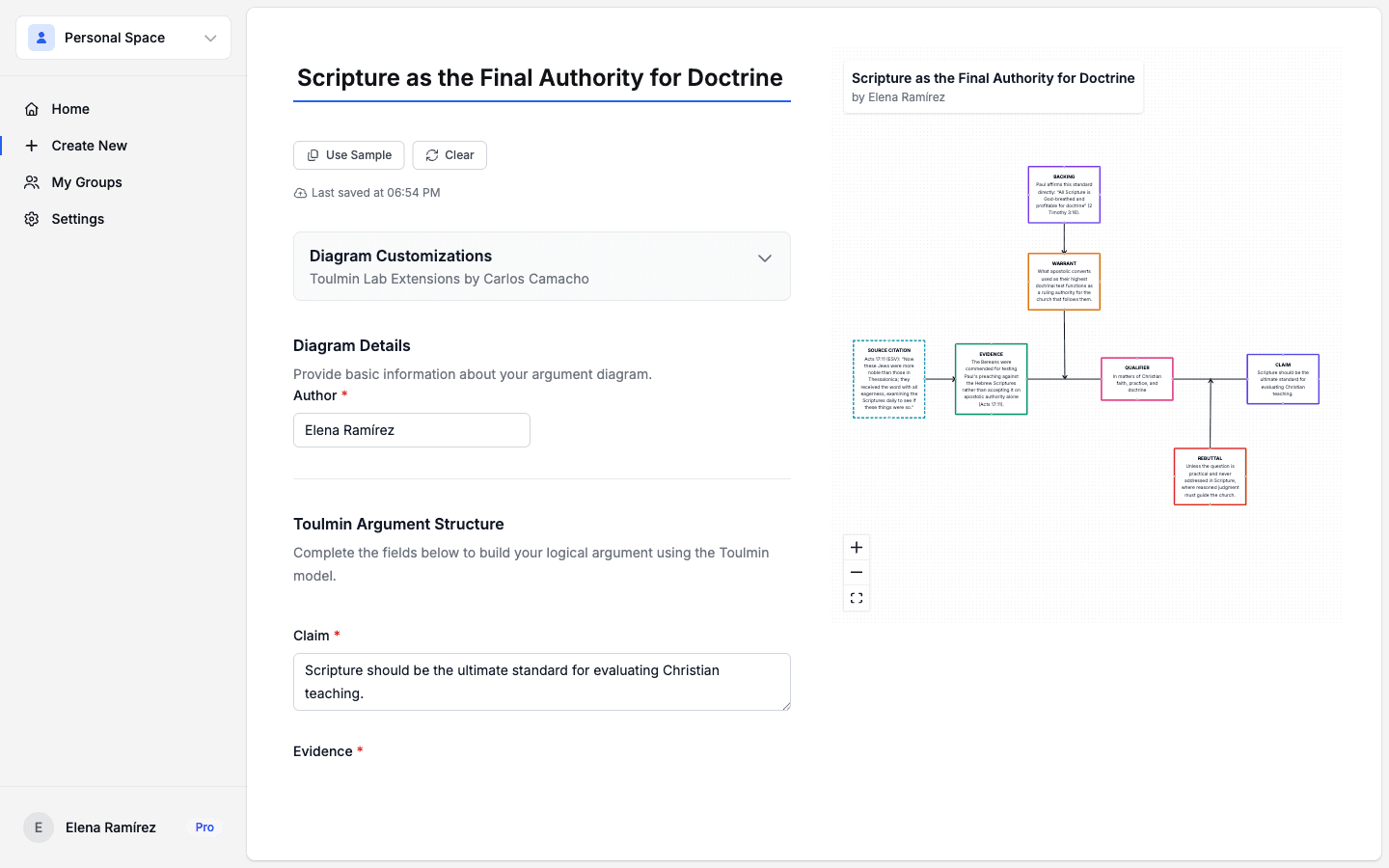
Construct arguments from scratch
Name your claim, grounds, warrant, backing, qualifier, and rebuttal. The diagram updates as you type.
- Guided form walks you through each component
- Live diagram preview updates in real time
- Export finished arguments as PNG, JPG, or PDF
An AI coach that asks the right questions
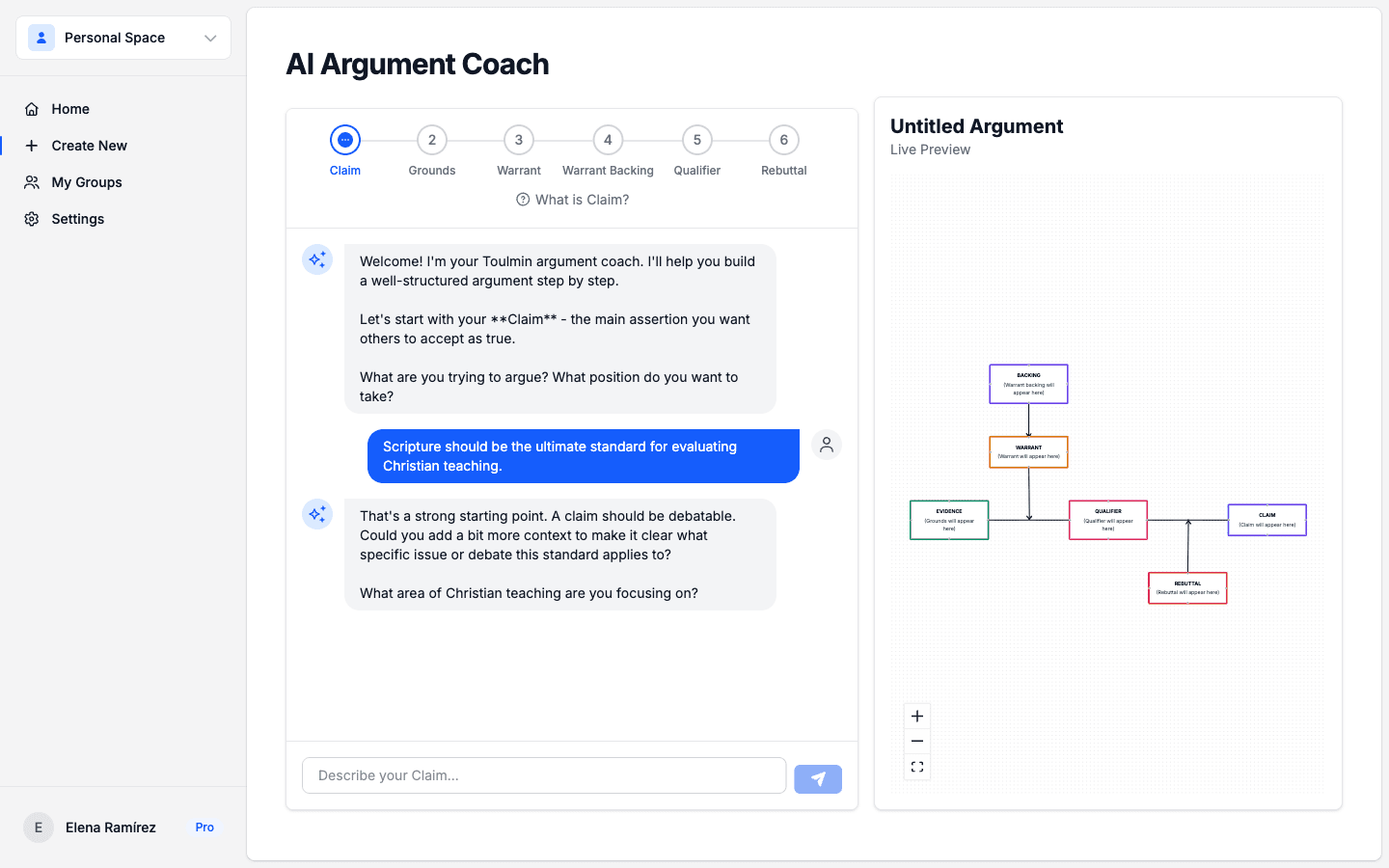
The AI coach asks Socratic questions about each part of your argument. You write the claim, the grounds, the warrant. The coach points out what's missing.
- Step-by-step guidance through all Toulmin components
- Proposes improvements only when you're ready
- Evaluates your finished argument with detailed feedback
Deconstruct any text through a Toulmin lens
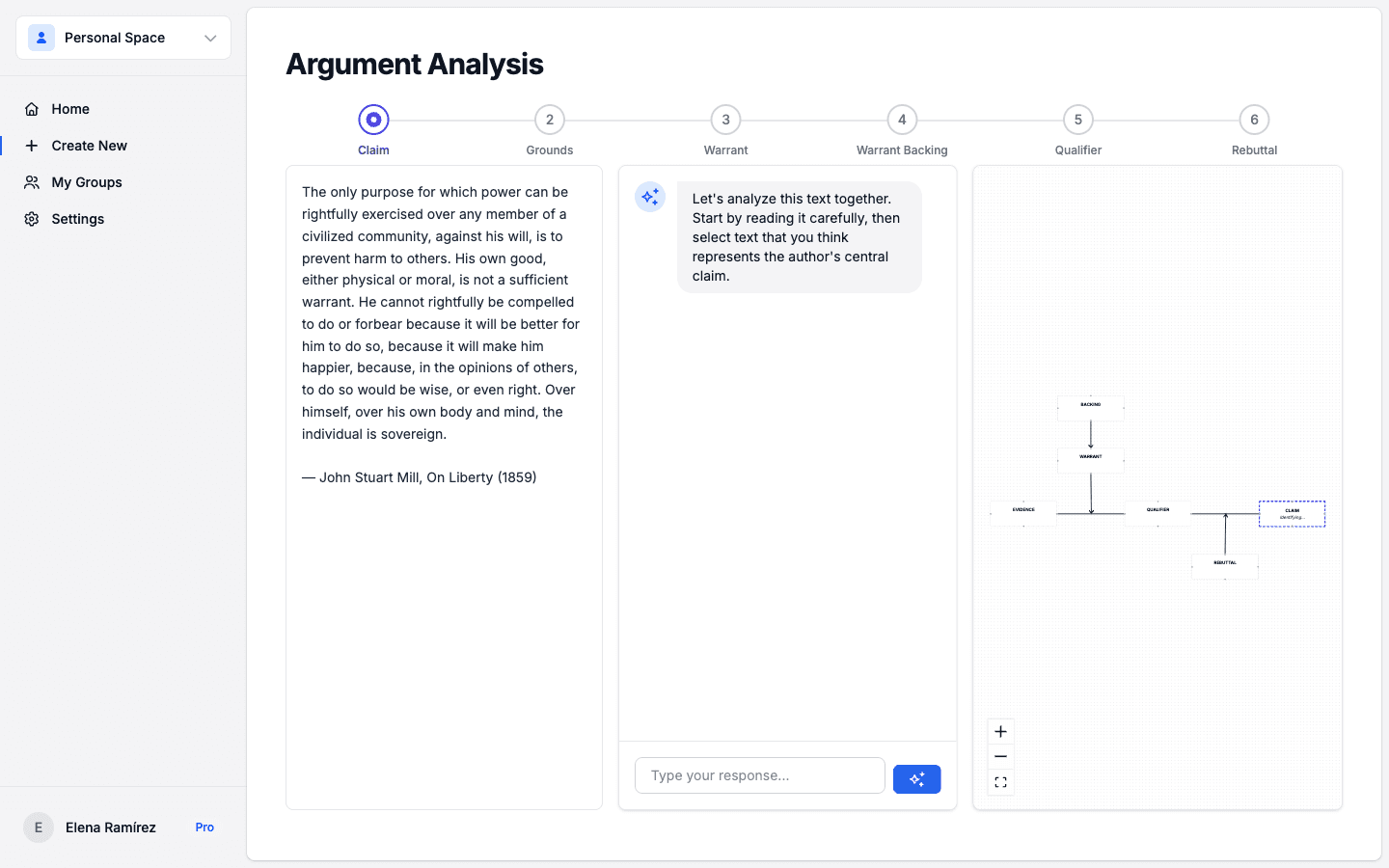
Paste an article or legal opinion. The AI helps you find the claim, grounds, and warrant in the text. Label each passage and build the diagram as you read.
- Highlight text passages that map to Toulmin components
- Progressive diagram builds as you identify parts
- Save your analysis as a complete Toulmin argument
AI that asks questions
Most AI tools hand students the answer. Toulmin Lab's coach asks them to find it.
Socratic guidance
You state your claim. The coach asks what evidence you have and why it matters. One question at a time, you build the full argument.
Smart proposals
The coach waits until your argument holds together before suggesting edits. You accept, reject, or rewrite each one.
Detailed evaluation
Submit your finished argument for a scored evaluation. You get ratings on each Toulmin component with written feedback on what to revise.
Built for the disciplines that teach argumentation
From claim to scripture
Link evidence to scripture with source citations. The extended Toulmin model adds a Source Citation field for verse-level references.
The Toulmin model, modernized
The framework is in your curriculum. Now your students have a tool to practice building and evaluating arguments with AI guidance.
Structure legal reasoning
Legal arguments follow a natural Toulmin structure. Students practice building and deconstructing cases with warrant-based reasoning.
From persuasive essays to debate prep
Students who practice structured argumentation write and speak more clearly. The diagram gives them a visual map of their reasoning.
Run your department on Toulmin Lab
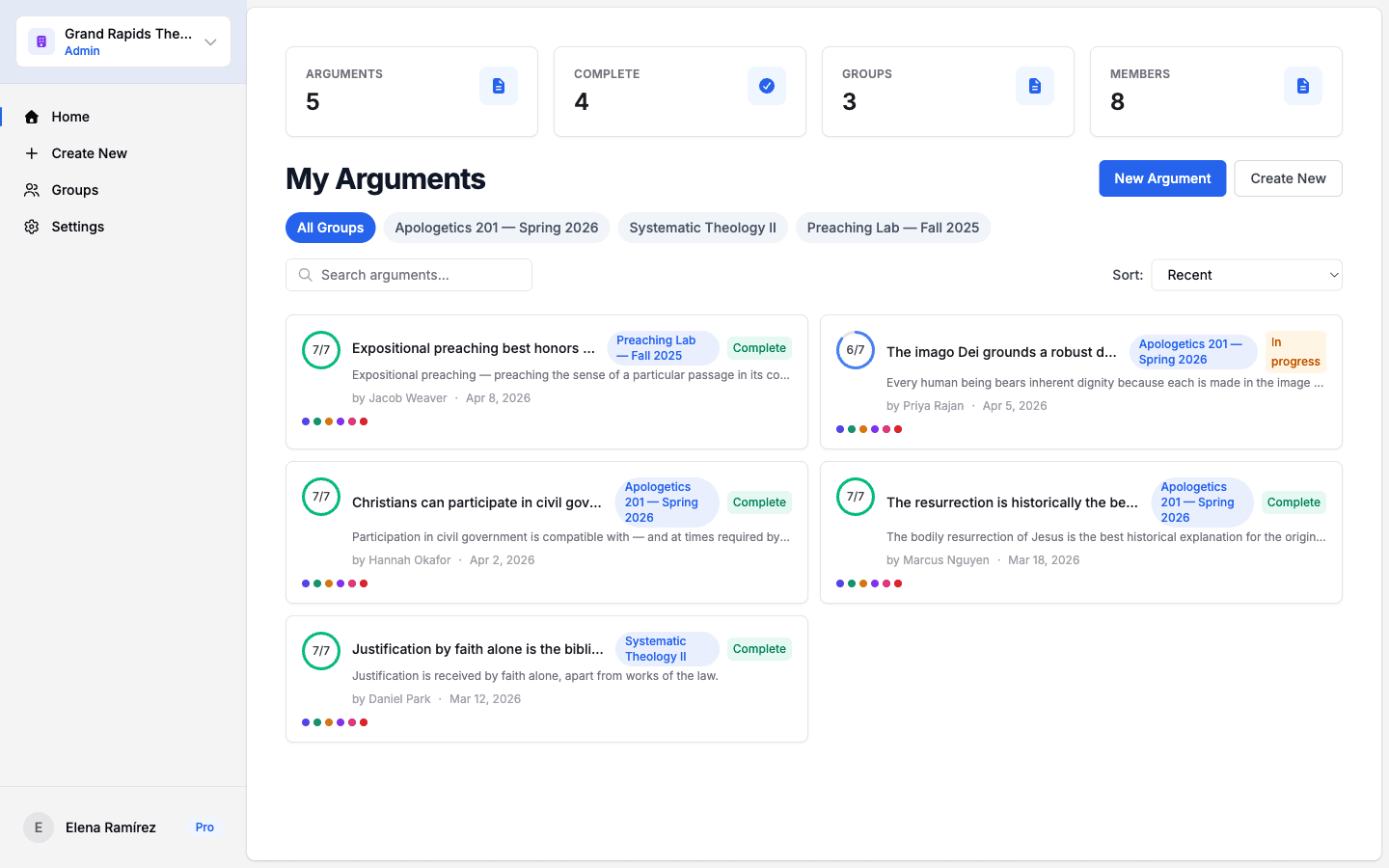
Create classes, track student progress, and brand the space with your logo and colors.
Institution Spaces
Your own branded environment with custom colors and logo
Groups & Classes
Organize students into cohorts with teacher oversight
Roles & Permissions
Admin, teacher, and student access levels built in
Progress Insights
Track how your students improve over time
The team behind Toulmin Lab
We built Toulmin Lab because the tools for teaching argumentation hadn't changed in twenty years. We wanted a modern platform where AI coaches students through their own reasoning.

Gabriel
Co-Founder
Software engineer at GoFundMe. Bachelor's in Bible Studies from TIBI, where he first learned Toulmin argumentation.

Carlos
Co-Founder
Electrical engineer and minister. Professor and Mentor for Students at TIBI with teaching experience across multiple countries.
FAQ
Frequently asked questions
Try it with your next class
Free accounts include unlimited diagram building. No credit card needed.